
Common Ground is not Common
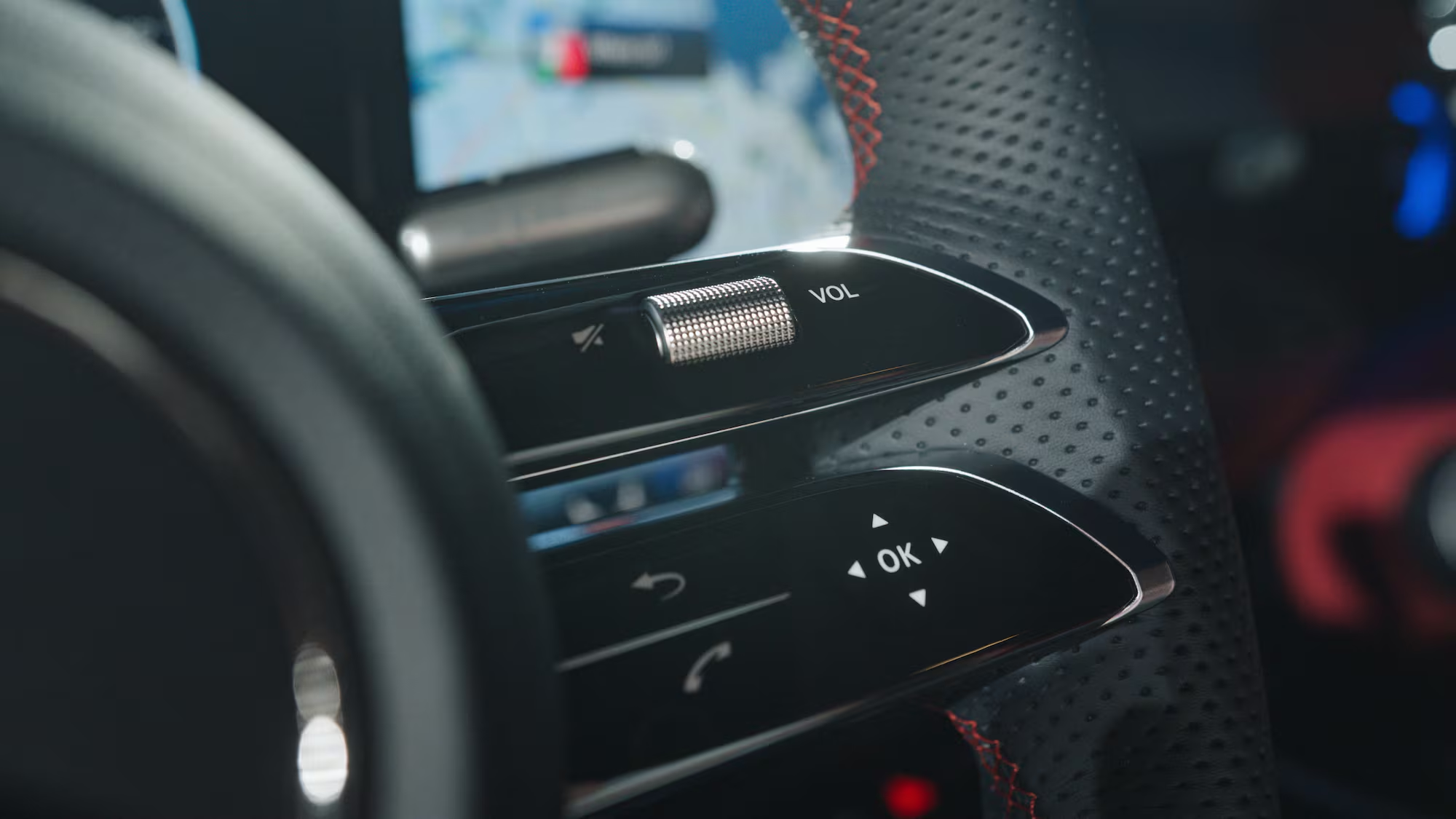
The auto industry often begins with a monolithic perspective when it comes to technology, sometimes driven by investors who may have a vested interest in the immediate commercialization of a technology, sometimes driven by competition, or by a partial understanding of consumer demand, or to simply move the needle of a technology.
🔆 As a result, it sometimes takes longer for a technology to assume its most logical, safe, and consumer-friendly form.
Take, for example, the case of the touchscreen. Following their success in smartphones and other digital devices, they became the de facto in-car HMI, with the biggest enthusiasm seen in the Chinese market that literally came of age in the new digital era.
🔆 It took some time for the industry to rethink and consider that, despite their aesthetics and advantages, they can be distracting at times and lack the deterministic feel of hard buttons and knobs.
🔆 In markets with a wide mix of consumer demographics, some drivers became overwhelmed, or outright annoyed, as indicated by the recent Tech Index Study (TXI) and Vehicle Dependability Study from J.D. Power.
🔆 Jony Ive, the legendary Apple designer leading Ferrari’s Luce infotainment design, even stated that despite the technical necessity of touchscreens in a smartphone, “that’s just the wrong technology for the primary interface” in a car, for a variety of reasons. Hard to ignore Mr. Ive as a Luddite!
💥 That said, touchscreens are here to stay.
💥 𝗕𝘂𝘁, the idea that simply slapping bigger, end-to-end touchscreens all over the interior is the sexiest holy grail of in-car HMI is no longer the case.
👉 The UX design in a few new models indicates an attempt to balance between touchscreen aesthetics and physical buttons for deterministic controls for key cockpit functions, emphasizing the design philosophy to strike a balance between large screens and easy-to-reach physical knobs for key functions.
👉 This is also a key motivation behind European NCAP’s recent push for physical buttons, at least for five key vehicle functions.
💥 𝗧𝗵𝗲 𝗯𝗼𝘁𝘁𝗼𝗺 𝗹𝗶𝗻𝗲 is that a new technology needs time to mature to its most effective version. In a market where the balance between innovation and what’s good and safe for the user in the long term sometimes gets fuzzy and lopsided, it is a good idea to think about the ultimate context and arrive at the common sense approach.
💥 The same can be said about autonomous technology (be it Level 2,3, 4, or 5), or software-defined vehicle (SDV), or where AI can bring the most value to consumers-at-large. 𝘉𝘶𝘵 𝘵𝘩𝘢𝘵’𝘴 𝘢 𝘥𝘪𝘴𝘤𝘶𝘴𝘴𝘪𝘰𝘯 𝘧𝘰𝘳 𝘢𝘯𝘰𝘵𝘩𝘦𝘳 𝘥𝘢𝘺.
See the Auto News article below, highlighting the ideas from the Car App World conference from this May.
https://www.autonews.com/technology/an-car-touchscreen-versus-buttons-design-issues-0630/
#HMI #UX #commonsense #technology #automotive #safety #touchscreens